How to Preserve Your Sports Club's History
A Guide for Clubs, Fans and Heritage Groups
LAST UPDATED: October 2026
Summary: Every sports club has a history, but few have an archive. This guide shows clubs, fans and heritage groups how to bring photos, programmes and memories together in a digital archive the whole club community can explore and add to.
Sport sits at the heart of many communities. From college football teams to the local rugby club to the Premier League, few things bring people together in quite the same way or create the same sense of camaraderie.
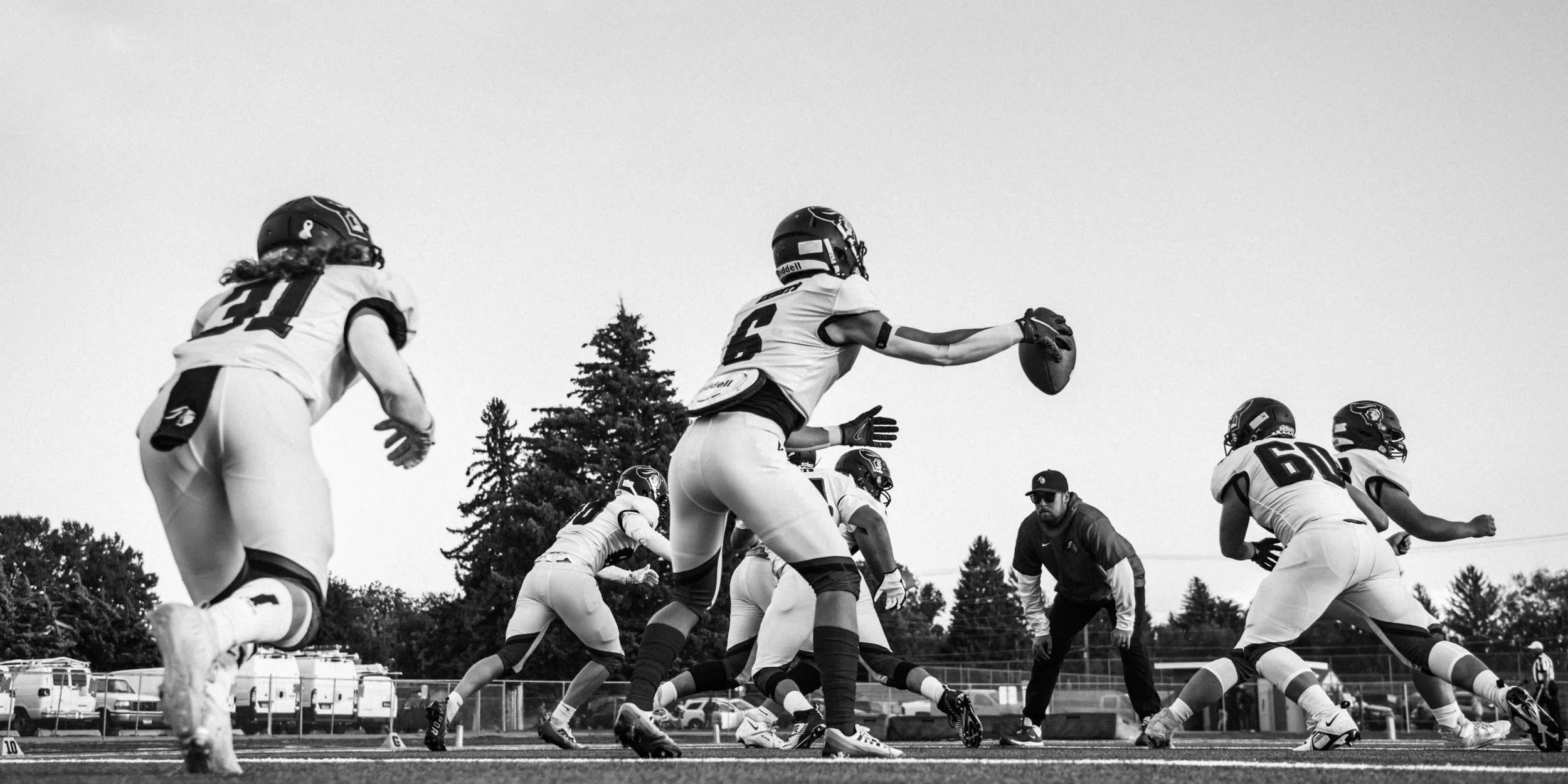
It is often the grassroots clubs that become part of people's lives, whether that's playing, supporting from the touchline or watching your child in the rain every weekend.
Sport's impact on wellbeing is well documented, not just for fitness and health, but for the sense of belonging and community it creates, which can last a lifetime.
The history of a sports club often stretches back almost as far as the community itself. It lives in memorabilia, scoresheets, player records, tickets and programmes and, arguably most importantly, in people's memories. Much of it is fragile: photos fade, scrapbooks get cleared out, and the people who remember the great seasons get older.
An anniversary or reunion is often when a club starts to look at its history and how to mark the milestone. Whether it's 50 years or 200, the roadmap is much the same.
So how do you preserve your club's history, make it accessible and, most importantly, make it valuable to the community you serve today? Luckily, it has never been easier.
This guide is for clubs, fan groups and heritage organisations who want to do exactly that. It covers what to collect, how to organise it, how to bring former players and supporters into the project, and how to fund it, including through heritage grants.
What is a club archive?
The word "archive" can sound formal, like something kept in a basement and only visited by historians. A club archive is much simpler and far more alive than that.
At its simplest, a club archive is the club's history gathered in one place: the photos, programmes, records and objects that survive, together with the memories of the people who were there. It can take two forms, and the best sports club archives use both.
A physical archive
This is the space at your club where original material is kept and displayed: a heritage room, a corner of the clubhouse, a few display cabinets or a well-organised storeroom. Members and visitors can see the real shirts, trophies and team photos, and it gives the club's history a visible place on matchdays and at events.
But physical archives have limits. They can only be seen by people who visit, often only when the clubhouse is open. Space is limited, so most material stays in boxes. And originals are vulnerable: a leaking roof, a fire, a refurbishment or the sale of a ground can destroy decades of history very quickly.
A digital archive
A digital archive holds scanned copies of that material online, alongside material that only exists digitally, such as recorded memories, match footage and photos sent in by supporters. It adds what a physical archive can't:
Nothing is lost. Even if an original is damaged or goes missing, a digital copy survives.
Anyone can visit, from anywhere. Former players who moved away, supporters overseas and people who can't easily get to the club can all explore it.
Everything is searchable. People can find a season, a match or a person in seconds, instead of searching through boxes.
People can contribute. Supporters can add photos from their own collections, name the people in team photos and share memories, so the archive grows far beyond what the club holds itself.
It can become a digital museum. Material can be brought together into online exhibitions, so everything that won't fit in a display cabinet can still be seen.
Why you need both
A digital archive doesn't replace the originals. Shirts, medals and minute books still need a safe home, and there's nothing quite like seeing them in person. But a digital archive makes sure the club's history survives whatever happens to the originals and opens it up to everyone who was part of it. The rest of this guide focuses on building that digital archive, starting with what to collect.
What a club archive can hold
Most clubs are surprised by how much material they have, especially once they start looking or asking around. Typical material includes:
| Type | Examples |
|---|---|
Photographs |
Team photos by season, match action, tours, presentation nights, the ground over the years |
Printed matter |
Match programmes, fixture cards, fanzines, newspaper cuttings, posters |
Records |
Minute books, membership lists, scorebooks, league tables, accounts |
People |
Player registers, appearance and scoring records, fans, coaches, officials, long-serving volunteers |
Objects |
Shirts and kit, caps, medals, trophies, pennants, tickets, badges |
Memories |
Stories from former players, fans, families and volunteers, in writing, audio or video |
Choosing a platform for your club’s digital archive
Before you start scanning, you need somewhere for it all to live. That choice shapes everything that follows: how people find material, whether they can add to it, and whether it's still online in ten years' time.
What to look for
Built for archives, not just a website. You need to organise material by season, team, person and event, add descriptions, and let people search across all of it.
Easy for anyone to contribute. Former players and supporters should be able to upload photos, tag people, comment and share memories without technical skills or a trip to the clubhouse.
Room for audio and video. Recorded memories and match footage are often the most valuable part of a club archive.
A way to tell stories. Look for online exhibitions or virtual spaces, so the archive can work as a digital museum rather than a list of files.
Control over what's public. You should be able to decide what everyone can see, what stays private, and how contributions are managed.
Accessible to everyone. Many of your most important contributors may be older, so it needs to be simple to use.
Long-term hosting included. Ask who handles hosting, security, backups and updates, and what happens if you ever need to export your content.
Clear costs. Know the annual cost so it can go in your budget or a grant application.
Your material stays yours. Check that you own what you upload and can export it if you ever need to move.
Your options
Most clubs choose between three routes.
| Option | Good for | Watch out for |
|---|---|---|
A bespoke website Built by a developer or a creative studio |
Good for A fully custom design, often alongside films, exhibitions and engagement work |
Watch out for High upfront cost, plus ongoing hosting, security updates and fixes after the project ends. A new project often means paying for another build. Administration and training often sit with one person. |
Free tools and file storage Spreadsheets, Dropbox, Google Drive, social media |
Good for Getting started quickly with little or no budget, and keeping a working copy of scans |
Watch out for Not built for archives. Material is hard to search and browse, scattered across places, not accessible to the wider community, and often relies on one volunteer. |
A hosted archive platform Online software built for archives |
Good for A ready-made archive with search, cataloguing and long-term hosting included |
Watch out for An annual subscription. Some platforms are built for institutions to catalogue collections and give the community no way to take part, so look for one that specialises in community archives and contributions. |
Many successful club heritage sites have been custom builds, and they can look fantastic. But they come at a significant cost. Features that a dedicated platform already has, such as photo uploads, search and tagging, have to be built from scratch, which takes time and adds to the bill. Once the site is live, hosting, security updates and fixes are a separate cost that is easy to leave out of the budget, and any new feature means paying for more development. This type of setup can also be very dependent on a single person or contractor who understands the technical setup of the site, in the event that person moves on from the project they can become challenging or impossible to maintain.
With a hosted community archive platform, those features already exist, and hosting, administration, and improvements are included in a predictable annual cost. YourArchive, for example, brings a club's collection and its community together in one place:
Organise everything by season. Photos, programmes and records sit together, so the whole story of a season is in one place.
Build a players directory. Every player who has worn the shirt, with their photos, seasons and stories.
Create a digital museum. Virtual Spaces turn the collection into online exhibitions anyone can visit.
Let the community contribute. Former players and fans can upload material, tag people, comment on photos and record memories from anywhere.
Find every photo of a person. Facial recognition helps people find all the photos they, or the people they know, appear in.
Keep control of your collection. Clubs can export their collection if they ever need to move it.
Bringing your archive to life
Once your archive has a home, the real value comes from what you do with it. An archive that simply stores scans will be visited once. One that invites people in, to name faces, share stories and explore exhibitions, becomes something the club community keeps coming back to. These are the ideas that work best for clubs, starting with the most familiar item in any club's history: the old team photo.
Put names to faces
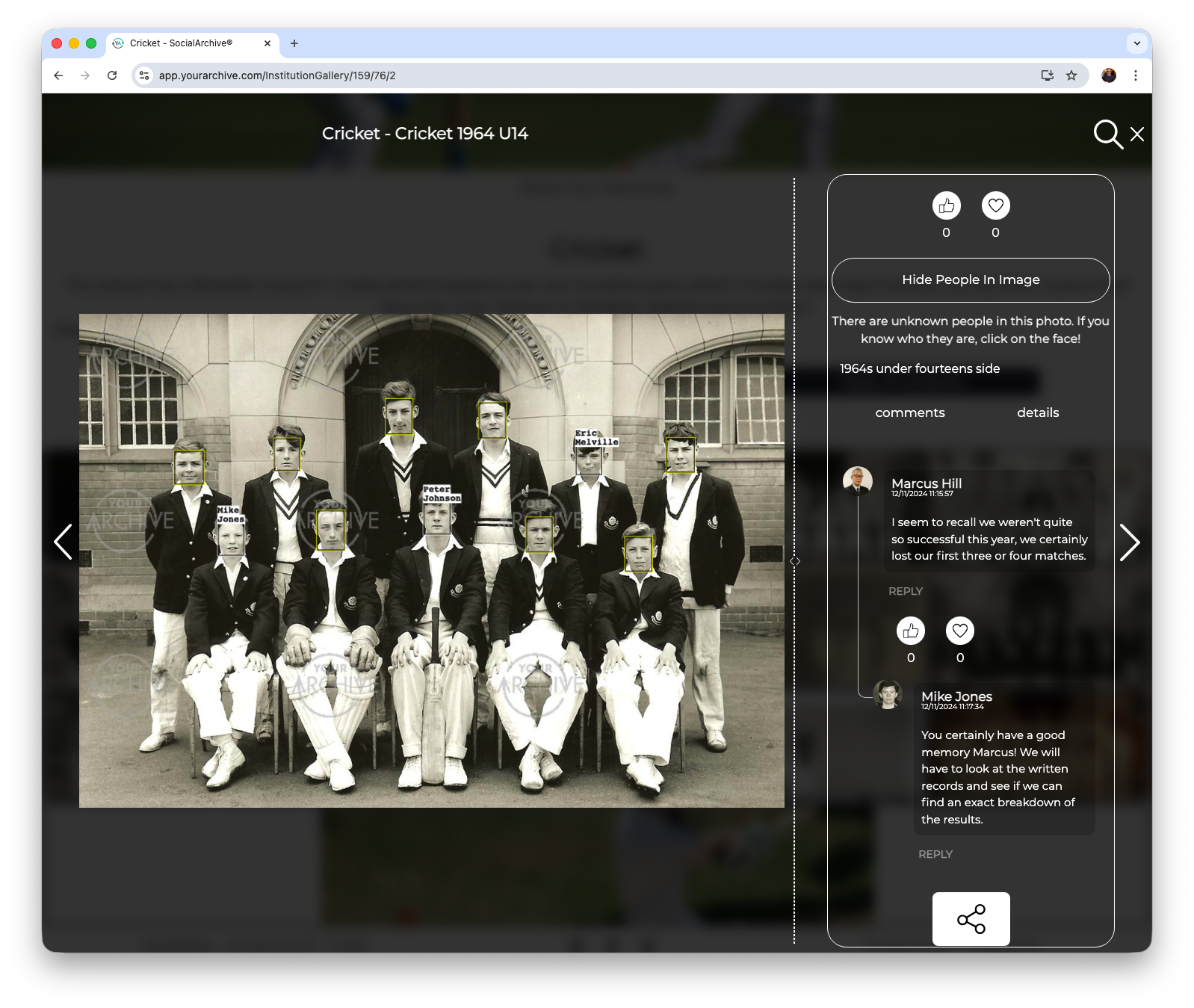
Almost every club has a team photo that nobody can fully identify. It was taken sometime in the 1970s, the clubhouse is in the background, and only three of the players have names.
A club historian could spend hours on that photo alone. Sharing it with the people who were there is far quicker. A former player recognises himself and a few teammates, someone else remembers the season, and a supporter names the opposition and tells the story of the day. An unnamed image becomes a proper historical record.
YourArchive is designed for exactly this. People can tag the players and supporters they recognise, comment on a photo, and add their memories directly to it, so the story stays attached to the image.
Facial recognition takes this further. Once someone has been tagged, YourArchive can find other photos of the same person across the collection. A former player can see every photo they appear in, from their first season to the 30-year reunion, and families can find photos of a parent or grandparent they never knew existed.
Make it a regular feature
Try a monthly "Can You Name This Team?" post. Share one unidentified photo on the archive and the club's social media, invite people to tag and comment, and report back on what was discovered. It gives former members a quick, easy reason to reconnect with the club, even if they haven't been to a match in years. One photo can start a conversation that leads to new photos, forgotten stories and old friendships rekindled.
Give every generation a voice
Some of a club's best history has never been written down. Official records tell you who won and who scored, but rarely what it felt like to be there: the comeback everyone still talks about, the coach who started the junior section, the supporter who never missed an away trip.
A club oral history project doesn't need expensive equipment or professional interviewers. Start with a few people with strong connections to the club and ask them to share their experiences. These questions work well:
What first brought you to the club?
Who are the people you remember most?
Which match, season or event stands out?
What was the ground or clubhouse like when you first arrived?
How has the club changed over the years?
What would you want future generations to know?
The best interviews often start with a photo, programme or object that sparks a memory.
YourArchive's Spoken Stories feature lets clubs capture and collect these recordings directly through the platform. Contributors can record their stories from home, so former players living elsewhere in the country, overseas or are unable to visit in person, can still take part.
Remember the people behind the scenes
It's easy to focus on star players and famous wins. But a long-serving groundskeeper may know more about the club's facilities than anyone, a former committee member may remember how the club survived a difficult decade, and a volunteer may have run the youth teams for 30 years. Recording their stories gives a fuller picture of the whole club, not just its most successful teams.
Build a digital museum anyone can visit
Most grassroots and amateur clubs don't have space for a physical museum, and where one exists, opening hours and location limit who can see it. A virtual museum can be visited by anyone, from anywhere, including former members overseas and supporters with limited mobility.
With YourArchive, clubs can create themed galleries that bring photos, documents, recordings and memories together around a story, rather than presenting visitors with a long list of files. A few ideas:
The season that changed everything. A famous promotion, title or cup run, told through team photos, programmes, newspaper reports, footage and memories from people who were there.
Our ground through the generations. How the club's home has changed, from old stands and clubhouses to matchday traditions, using photos, maps and supporters' recollections.
The people who built our club. Founders, influential players, coaches and long-serving volunteers, with photos, short biographies and recorded stories.
Tours, friendships and rivalries. Overseas tours, memorable away trips and long-running rivalries, told through programmes, travel memorabilia and first-hand accounts.
A century in ten decades. A centenary gallery that walks visitors through the club's history decade by decade.
Because the galleries draw on the wider collection, they can keep growing as new photos and memories are added.
For a more immersive experience, YourArchive's Virtual Spaces let clubs create an interactive virtual tour, of the clubhouse, the ground or a heritage room, for example, so supporters can explore it online from anywhere.
Bringing former players back together
A club archive is not only about the past. It can also reconnect people who shared a team, a season or a tour decades ago.
Take Cornell University's lightweight football team, known as the 150s. In December 1976, 55 members of the team travelled to Japan to compete in the Silk Bowl. Now, 50 years later, with a reunion on the horizon, they're bringing the memories of that remarkable trip back together.
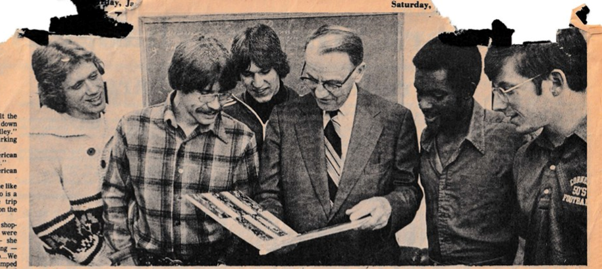
Using YourArchive, the team is creating a shared collection of newspaper articles, team rosters, photographs and personal memorabilia, with every former player invited to contribute whatever they've kept from the tour.
But it's about more than gathering material in one place. It's about reconnecting the people and memories behind it.
With facial recognition, players can discover photographs of themselves from across the tour and each has their own personalised gallery bringing together everything that features them.
Teammates can then fill in the gaps together: tagging players hidden behind helmets, putting names to forgotten faces and commenting on photos with their own recollections. Piece by piece, they're building a richer account of the trip than any one player could tell alone.
And for those unable to attend the reunion, the archive offers something equally valuable: the opportunity to reconnect with old teammates, revisit shared experiences and take part in the celebrations, wherever they are in the world.
The same approach works for any club planning a former players' reunion. Rather than simply sending invitations, launch the collection a few months beforehand. Former players can upload photos, tag teammates and share memories in the run-up, and the club can turn the best of it into a gallery for the day itself. When the reunion is over, the collection stays as a lasting record, and the reconnections can lead to more photos, more stories and new volunteers.
Turn an anniversary into something lasting
A 50th, 100th or 150th anniversary is the most common reason clubs start a history project. But anniversaries often follow a familiar pattern: the committee spends months gathering photos and memories, the celebration happens, and the material goes back into storage.
Making collecting part of the celebration itself avoids that. A club could:
Ask supporters for 100 photos to mark 100 years
Post a different historical team photo each week for people to identify
Record 20 interviews with former players, coaches and volunteers
Create a centenary gallery or virtual tour that supporters anywhere can visit
Invite junior teams or local schools to explore how the club and its community have changed
Host a reunion where contributors can see what the archive has uncovered
Activities like these give people ways to take part before, during and after the anniversary, and they tend to appeal to sponsors, local partners and heritage funders. Most importantly, the archive is still there when the celebrations are over. Our centenary celebration ideas has more on planning the wider celebrations.
Make this season tomorrow's history
A club archive should record the present as well as the past. Every season creates material worth keeping, but most of it is posted on social media or WhatsApp…and then forgotten. Ten years later, nobody can remember who was in the photo or what the occasion was.
A short end-of-season routine solves this:
Upload the official team photos with names, dates and team details.
Add key results, match reports and milestones.
Record awards, events and achievements.
Invite members to share their favourite memory of the season.
Keep photos of facilities, volunteers and community activities too.
It's also a good way to involve younger members. Junior players could interview former players, help identify photos or put together an exhibition comparing the club today with previous generations. A club archive is never finished, and the best ones keep growing every season.
Funding your club history project
Many club history projects can start with a handful of volunteers and a small collection. Supporters can help identify photos, transcribe documents and track down contributors, and local history societies or universities can be useful partners for larger collections.
For larger projects, sponsorship opportunities and heritage grants are worth exploring. In the UK, the National Lottery Heritage Fund offers grants from £10,000 to £250,000, and people's memories and experiences, often recorded as oral history, count as heritage. A sports club's history can qualify when the project focuses on its heritage and the community around it, so it is worth checking your idea with the Fund early. Its optional project enquiry gives feedback within ten working days.
-
Check who can apply
Many heritage funders only support not-for-profit organisations, so check whether the club itself, a supporters' trust, a local heritage group or a partnership between them is the right applicant.
-
Budget for the digital side
Include scanning, recording equipment, transcription, and the cost of hosting the archive, including for the years after the project ends. A costed, ready-made platform is easier for a funder to assess than an open-ended custom build.
-
Access and licensing
Many funders expect funded digital material to be freely available, sometimes under an open licence such as Creative Commons. Check what your funder requires and agree it with contributors when you collect their material.
-
Inclusion and participation
Funders want to see who will take part, not just what will be saved. Show how former players, fans, young people and the wider community can contribute and gain value from the project.
-
LegacyOften the weakest part
Explain where the archive will live after the grant, and who will keep it growing. This is often the weakest part of an application, and the easiest to strengthen with a clear plan.
Funding doesn’t have to come from grants alone. Sport sits at the heart of many communities, and you may be surprised how many local businesses and sponsors want to get behind a project like this. Your fans and former players may be willing to help too, whether by contributing money, time or material. And the more people who are invested in the archive, the more they’ll care about it.
Bring your club's history together
Every club’s story is held by the people who were part of it: the players who pulled on the shirt, the volunteers who kept the lights on and the supporters who stood in the same spot every Saturday. Bringing that history together, before more of it is lost, is one of the most lasting things a club can do.
It doesn’t have to start with a big project. A few photos, a handful of memories and a place to keep them is enough to get people talking. Once they are, the archive starts to grow on its own.
Whether you’re planning a centenary, reconnecting former players or starting your first club heritage project, YourArchive brings your collection and your community together in one place. Book a demo or email us to find out how we could help preserve the history of your club.
FAQs
How do you create a digital archive for a sports club?
Start by gathering your club's historical photographs, match programmes, player records, memorabilia and personal memories. Digitise the material and organise it by season, team, player or event so people can easily find what they're looking for. A dedicated digital archive platform such as YourArchive allows clubs to create a searchable collection while inviting former players, supporters and volunteers to contribute photographs, identify people and share memories.
What should I look for in a digital archive platform for a sports club?
Look for a platform built for archives rather than a general website, that lets your community contribute photos and memories, handles audio and video, and includes hosting, security and backups in a clear annual cost. Check that you own your material and can export it.
What is the best way to preserve old football, rugby or cricket club photographs?
Digitise original photographs at a high resolution, preserve the originals safely and record as much information as possible about each image, including dates, locations, teams and player names. Store digital copies securely with appropriate backups. Using a searchable sports club archive, you can also invite former players and supporters to identify people, tag photographs and add comments, helping turn unidentified images into valuable historical records.
Can facial recognition help identify players in historical team photographs?
Yes. Facial recognition technology can help locate possible appearances of the same person across a collection of historical sports photographs. With YourArchive, once individuals have been identified and tagged, facial matching can help uncover other photographs featuring those people. Combined with community contributions and human verification, this can help clubs identify former players, reconnect teammates and build a more complete photographic history. Appropriate privacy and data protection safeguards are important.
How can sports clubs collect memories and oral histories from former players?
Clubs can preserve former players' memories through recorded interviews, written recollections and audio or video stories. Ask about memorable matches, teammates, coaches, tours and club traditions. YourArchive's Spoken Stories feature enables contributors to record and share their memories remotely, making it easier to involve former players, supporters and volunteers who live elsewhere or cannot visit the club in person.
Can a sports club create an online museum or virtual heritage exhibition?
Yes. A digital sports museum allows clubs to showcase their history through photographs, memorabilia, documents, video and recorded memories without needing a dedicated physical exhibition space. With YourArchive, clubs can create themed galleries celebrating historic seasons, legendary players, former grounds and anniversaries. Its Virtual Spaces feature also enables interactive virtual tours of locations such as clubhouses, grounds and heritage rooms, making sporting heritage accessible to supporters anywhere.
How can a sports club celebrate its 100th anniversary or centenary?
A club centenary is an opportunity to bring generations of players and supporters together. Popular ideas include creating a digital history archive, organising former players' reunions, collecting historical photographs, recording oral histories and building an online centenary exhibition. A digital archive ensures the photographs, stories and memorabilia gathered for the celebrations remain accessible long after the anniversary has passed.
Can sports clubs get funding to preserve their history?
Yes. Sports clubs and community heritage groups may be eligible for grants to support projects involving historical collections, digitisation, oral history and community participation. In the UK, the National Lottery Heritage Fund supports eligible heritage projects, including those exploring people's memories and community heritage. A strong application should explain the collection's significance, how the community will participate and how the digital archive will be maintained after funding ends.
Other articles that may be of interest: