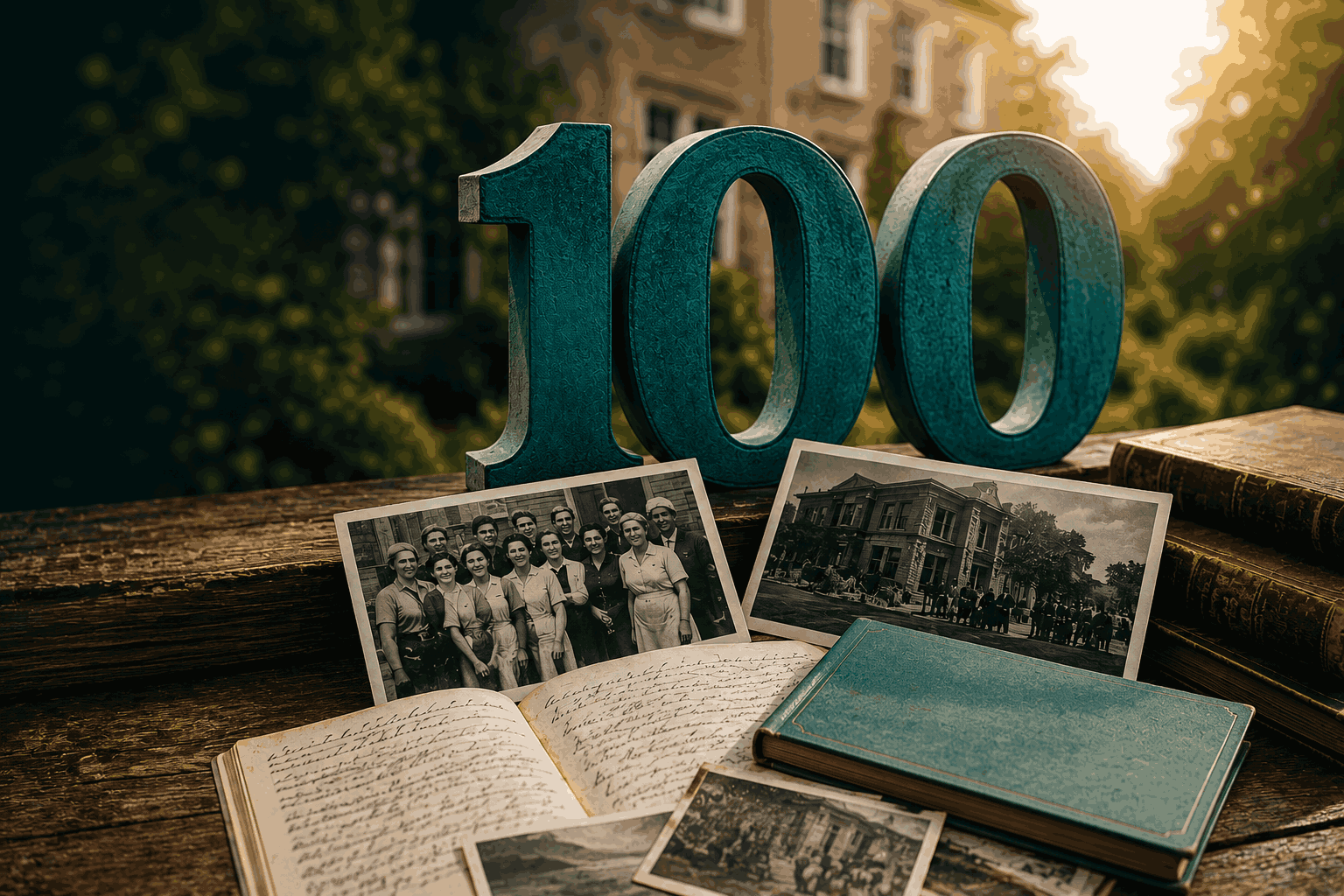
Archive Storytelling: Why Every Collection Has Stories Worth Telling
LAST UPDATED: July 2026
Summary: Every archive contains stories worth telling. The challenge isn't finding them, it's bringing them to life. Discover why organisations across every sector are investing in storytelling, what heritage organisations can learn from leading brands, and how archives, museums, libraries and local history societies can transform collections into engaging content that attracts visitors, volunteers, supporters and funding.
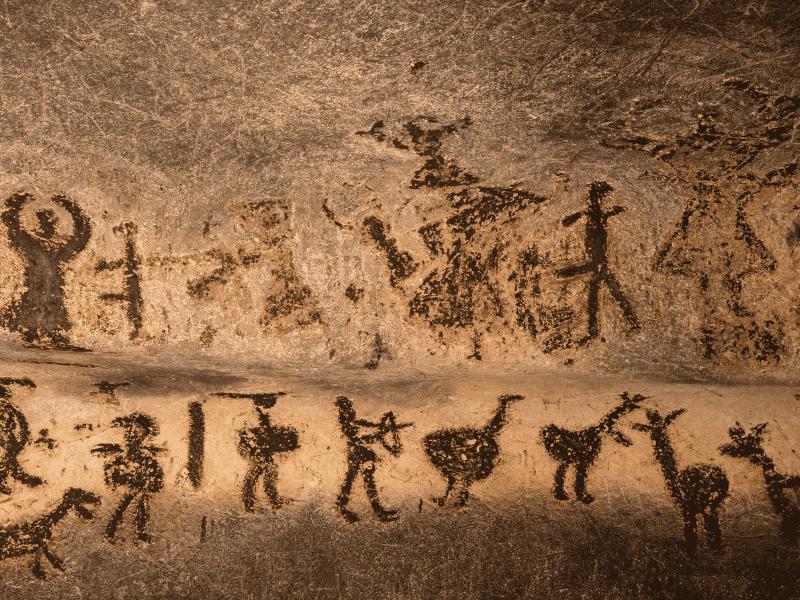
Long before there was paper, there was the cave wall. At Lascaux, discovered in France in 1940, artists worked by the flickering light of fat-burning lamps around 21,000 years ago, drawing animals with a technique so deliberate that researchers have described it as a kind of prehistoric cinema. At nearby Chauvet, the paintings are older still, created around 36,000 years ago and among the oldest figurative art ever discovered. There was no written language yet, no filing system, no archive box. The story itself was the record, carried forward by memory and by the will of someone to keep telling it.
Every archive, whether it belongs to a cathedral, a university, a small local museum or a public library, holds the same raw material as that cave wall. Photographs, letters, minute books, oral histories, objects that meant something to someone once. The difference is scale, and the difference is that most of it sits unseen.
The challenge has never been whether archives contain stories. It's whether those stories are ever given the chance to be heard.
A story in a box is still just a box
A photograph that has been digitised and catalogued is safe. It's searchable, backed up and protected against fire, flood and time. Yet safety alone rarely inspires someone to donate, volunteer, visit or care. That happens when someone explains why the photograph matters and connects it to a wider human story.
That gap between preservation and meaning is not a new problem for archives. What's changed is that organisations far beyond the heritage sector have begun treating storytelling as a strategic skill rather than simply a communications exercise.
Why the corporate world is investing in storytellers
A recent Wall Street Journal report highlighted a sharp rise in companies hiring dedicated storytellers: professionals whose role is to turn products, people and corporate history into narratives that resonate with customers, investors and employees. Mentions of "storyteller" and "storytelling" in LinkedIn job postings have roughly doubled over the past year, while the terms now appear on earnings calls more than three times as often as they did a decade ago.
The shift reflects a broader change in how organisations communicate. As traditional media has declined, businesses have become their own publishers, using newsletters, podcasts, websites and social media to tell their stories directly. One communications leader quoted in the piece put it plainly: audiences increasingly trust brands that come across as authentic and human, especially at a time when so much online content feels synthetic.
Archives, libraries, museums and charities already possess something many businesses are trying to create: authentic, original stories. They don't need to invent a narrative or manufacture nostalgia. Their challenge is to uncover what already exists, shape it into something meaningful, and share it with the people who will value it.
What brands understand about memory
Consumer brands have long understood the commercial value of shared history. As SocialArchive explored in How Brands Use Nostalgia to Drive Engagement, the strongest nostalgia campaigns don't simply revisit the past; they reconnect people with memories that already carry emotional meaning.
A few recent examples of brands doing exactly that:
Apple
iPod, 20th anniversary
A special edition device built around the original's design.
Ford
Mustang, 60th anniversary
A limited run built around cues from the 1965 original.
Guinness
265 years of brewing
A documentary series drawing on its own long history.
Harley-Davidson
120th anniversary
Events built around its riding community's shared history.
Different brands, different audiences, but the same underlying principle.
None of these campaigns worked because the products themselves changed. They worked because each brand identified moments that already mattered to its audience and resurfaced them at exactly the right time: an anniversary, a milestone or a shared cultural moment.
Heritage organisations already sit on that same kind of material, often in greater depth than any consumer brand could hope for. A parish register, a school photograph from the 1950s, an oral history recording of a founding member. The memories already exist. The opportunity lies in bringing them back into the conversation.
Why this matters more for heritage organisations
For a business, storytelling helps sell products. For an archive, library, museum or charity, it does something even more fundamental: it helps ensure the organisation remains relevant, supported and sustainable.
Funding follows narrative, not metadata. Trustees, grant panels and individual donors rarely respond to a spreadsheet showing how many items have been digitised. They respond to a letter written home during the war, a school photograph that sparks recognition, or an oral history that brings a forgotten voice back to life. Individual stories give people a reason to care about the collection as a whole.
The same is true for volunteers and members. Few people are inspired by the prospect of reducing a cataloguing backlog, but many are motivated by the chance to uncover a forgotten photograph, identify an unknown face or reconnect a community with part of its shared history. Those are the stories people tell their friends and the experiences that encourage them to come back.
Storytelling also keeps collections visible. An archive that only surfaces when someone has a research enquiry will always remain a background resource. One that regularly shares the people, places and moments hidden within its collections becomes part of its community's ongoing conversation instead.
Ultimately, belonging is built through specifics. Broad promises about "preserving local heritage" rarely create an emotional connection. A named individual. A dated photograph. A well-worn object with a known provenance. These are the details that allow people to recognise themselves, their families and their communities in the past—and to see why preserving it matters.
Where archivists and heritage professionals get stuck
None of this is a criticism of archivists, librarians or heritage professionals. Most are trained, rightly, to preserve collections, maintain standards and provide access. Very few are trained in narrative, and even fewer have the time to take on a communications role alongside an already demanding workload.
The result is a familiar pattern: collections that are exceptionally well cared for, but rarely seen beyond researchers, regular visitors or the annual newsletter.
Digitisation is usually framed as the finish line. In practice it is closer to the starting point. Preserving a collection protects it for the future. Sharing it helps people understand why it deserves to be preserved in the first place.
Turning archives into stories
-
1
Start with people, not periods
A named individual is easier to picture than a decade.
-
2
Anchor stories to a calendar
Anniversaries, founding dates and reunions give a story a reason to be told now.
-
3
Tell one story at a time
A single item, or a curated set of related items, beats a general appeal to "explore the archive."
-
4
Pair the object with the voice
Comments add context. Spoken memories turn an object into a story.
-
5
Match the format to the audience
One story, reshaped for social media, a newsletter, a video or a physical display.
-
6
Make it someone's job
Even one hour a week, owned by one person, builds a habit and an audience.
Every organisation already has stories worth telling. The challenge is creating a simple process that helps uncover and share them consistently.
Start with people, not periods. A story built around "the 1960s" is a research topic. A story built around a named pupil, member, volunteer or founder in the 1960s is something a reader can picture. Search for names before dates.
Anchor stories to a calendar.Anniversaries, founding dates, reunions and annual events all provide a natural reason to tell a story now rather than "one day".
Tell one story at a time. Most people won't begin by exploring an entire archive. They'll start with a single photograph, a familiar name or a carefully curated collection that sparks their curiosity. That story might be told through one letter or oral history, or through a themed gallery, such as a school's sporting history, one street through the decades or memories from a particular community event. Curated collections provide a natural starting point, making an archive feel welcoming rather than overwhelming, and encouraging people to keep exploring.
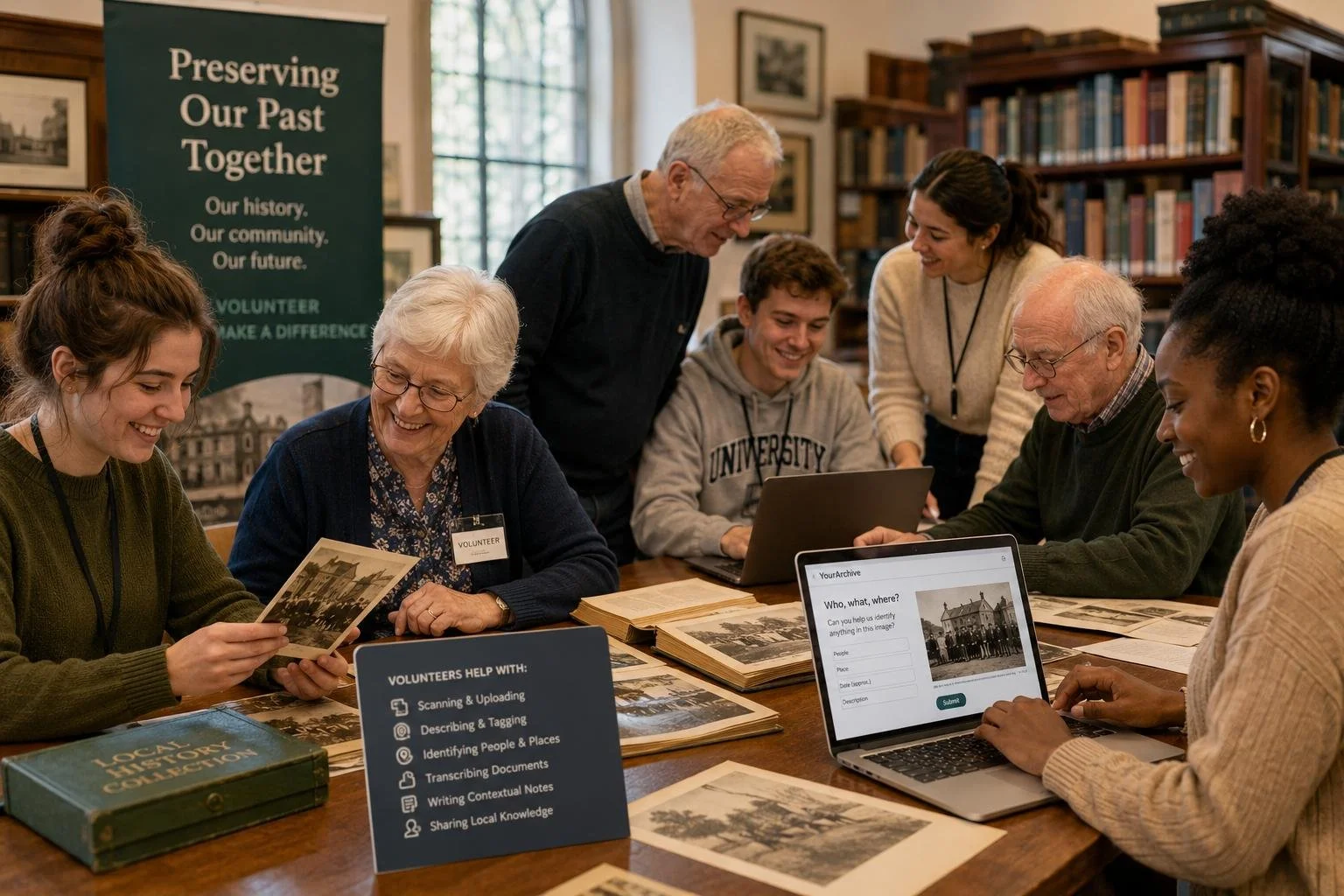
Pair the object with the voice. Objects preserve evidence. People preserve meaning. A photograph becomes richer when someone remembers the day it was taken. A programme gains significance when the performer recalls stepping onto the stage. Capturing those memories alongside the original material creates a far more complete historical record. Platforms such as YourArchive make this easier by allowing people to contribute comments and memories alongside archive items, creating a living collection rather than a static catalogue.
Match the format to the audience. The effort should go into discovering the story, not recreating it. Once you've uncovered a compelling photograph, memory or collection, it should be able to live in many forms: a social media post, a newsletter article, an exhibition panel, a podcast or a short video. The story doesn't change; only the presentation does.
Make it someone's job, even for an hour a week. Storytelling only becomes consistent when somebody owns it. That doesn't require a dedicated communications team. Even one hour each week spent uncovering and sharing a story will gradually build a habit, and an audience.
The task has not changed, only the tools
The painters at Lascaux and Chauvet did not have a content strategy. They had something they needed people to remember, and a wall.
Thousands of years later, the challenge is remarkably similar. Archives, libraries, museums and heritage organisations are still deciding what deserves to be remembered and how to share it with the people who will care. The opportunity has changed, even if the task hasn't. Today's tools make it possible to preserve, search and share collections in ways those early storytellers could never have imagined.
Every archive already contains stories worth telling. The organisations that make the greatest impact aren't necessarily those with the biggest collections, but those that consistently bring those stories into the lives of the communities they serve.
Long before there were archives, people understood the power of stories. The technology has changed. Human nature hasn't.
Open the box. Tell one story well. Then tell another.
Every archive holds stories worth telling. YourArchive helps heritage organisations, museums, libraries and community groups preserve, search and share theirs, turning static collections into living history. Book a demo to see how it could work with your own collection.
FAQs:
What is archive storytelling?
Archive storytelling is the process of turning historical records, photographs, oral histories and other archival material into engaging narratives that connect with modern audiences. Rather than simply preserving collections, archive storytelling helps organisations share the people, places and events behind them in ways that inspire interest, participation and support.
Why is storytelling important for archives?
Storytelling helps people understand why a collection matters. While digitisation preserves records, stories create emotional connections that encourage visitors to explore, volunteers to contribute, communities to engage and funders to support future preservation work.
How can archives use storytelling to engage their communities?
Many archives begin by sharing a single photograph, letter, oral history or object and explaining the people or events behind it. Curated collections built around anniversaries, local events, schools, sports clubs or significant individuals also provide accessible entry points that encourage people to contribute their own memories and knowledge.
How does digitisation support archive storytelling?
Digitisation makes collections searchable and accessible, but it also makes storytelling much easier. Once records have been digitised, organisations can quickly find photographs, documents and oral histories to create exhibitions, newsletters, social media content and themed collections that reach much wider audiences.
Can small archives use storytelling effectively?
Absolutely. Storytelling isn't about having the largest collection; it's about choosing meaningful stories and sharing them consistently. Even a small archive can engage its community by regularly highlighting individual photographs, documents or local memories.
What types of archive material make the best stories?
Some of the most engaging stories come from everyday items rather than the most historically significant ones. School photographs, family letters, event programmes, oral histories, newspaper cuttings, sporting memorabilia and local business records often generate the strongest emotional connections because people can recognise themselves, their relatives or their communities within them.
How often should archives share stories?
Consistency matters more than volume. Sharing one well-researched story each week or month is often more effective than publishing large amounts of content irregularly. Building storytelling into everyday archive work makes it easier to maintain over time.
Can archive storytelling help attract funding?
Yes. Grant applications, fundraising campaigns and donor appeals are often stronger when they demonstrate the human impact of a collection. Personal stories help funders understand why preserving an archive matters and how it benefits the wider community.
What's the difference between digitising an archive and engaging people with it?
Digitisation preserves collections by protecting and organising historical material. Archive engagement is about helping people discover, understand and connect with that material. The two work best together: digitisation makes stories easier to find, while storytelling helps communities appreciate why those collections are worth preserving.
Other articles that may be of interest: