Digital Preservation for Public Libraries: A Practical Guide
Public libraries are custodians of something irreplaceable. Photographs, local newspapers, oral histories, land records, meeting minutes, genealogy files — materials that exist nowhere else and that document the lives of real communities across generations. For much of the history of public libraries, preserving this material meant keeping it safe on a shelf. That is no longer enough.
Digital preservation is rapidly becoming a priority for public libraries of all sizes. Not just as a technical exercise, but as a community responsibility. The question is no longer whether to digitize and preserve local collections, it is how to do it in a way that is sustainable, accessible, and genuinely useful to the communities libraries serve.
This guide covers what digital preservation means in practice for public libraries, the main approaches available, and how the libraries doing it best are using community engagement to build collections that grow beyond what staff alone could ever achieve.
What Is Digital Preservation in Public Libraries?
Digital preservation in public libraries is the process of ensuring digital collections remain accessible, usable and authentic over time. The term digital preservation is sometimes used to mean simply scanning things and putting them online. In practice, it means considerably more than that.
As defined in widely accepted digital preservation guidance (including American Library Association resources), digital preservation refers to the managed activities necessary for ensuring both long-term maintenance of a byte stream and continued accessibility of its contents. In plain terms: it is not enough to create a digital file. That file must be stored in a format that remains accessible as technology changes, described with metadata that makes it findable, and maintained in a system that monitors its integrity over time.
For a public library getting started, this means thinking about four things:
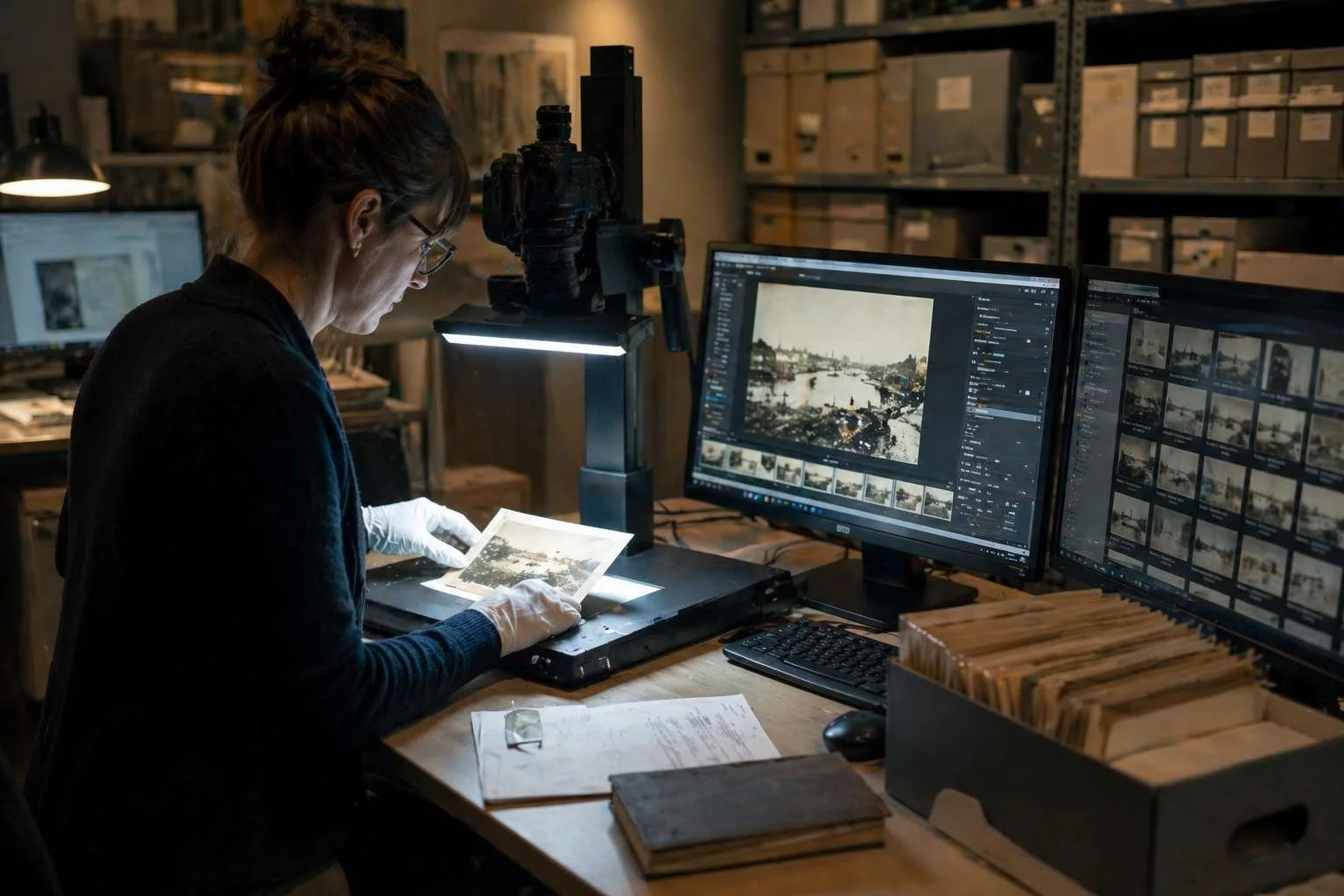
File formats: Open, non-proprietary formats (TIFF for images, PDF/A for documents, WAV for audio) are more likely to remain accessible as software evolves than commercial or proprietary alternatives.
Metadata: Consistent descriptive information attached to each item (what it is, when it was created, who or what it depicts, where it came from) is what makes a collection searchable and discoverable rather than just stored.
Storage and redundancy: A digital file kept in one place is not preserved. Best practice involves multiple copies in geographically dispersed locations, with regular integrity checks to confirm files have not degraded or been corrupted.
Long-term access: Preservation without access serves nobody. The goal is not just to keep things safe, but to make them findable and usable by researchers, community members, and future generations.
Digitization Vs Digital Preservation
Scan it and store it
-
✗
No consistent metadata
Files exist but are unsearchable and undescribed
-
✗
Single copy, single location
One hardware failure can mean permanent loss
-
✗
Proprietary file formats
Risk of format obsolescence as software changes
-
✗
Staff access only
Community members cannot discover or contribute
-
✗
No integrity monitoring
File degradation or corruption may go undetected
Built to last and built to share
-
✓
Consistent metadata standards
Every item described, searchable and discoverable
-
✓
Multiple copies, dispersed storage
Redundancy protects against hardware failure or disaster
-
✓
Open, non-proprietary formats
TIFF, PDF/A, WAV — accessible as technology evolves
-
✓
Public access and community contribution
Anyone can discover, explore and add to the collection
-
✓
Ongoing integrity monitoring
Regular checks confirm files remain intact over time
Digitization creates a copy. Digital preservation commits to keeping that copy accessible, intact and findable — not just today, but for the communities who will use it decades from now.
The Library of Congress, which coordinates the United States' national approach to digital preservation, describes its commitment as developing effective methods for digital content management, organisation, preservation, and access. For public libraries working at a local level, the same principles apply, scaled to the resources and collections available.
Why Community Engagement Is Central to Library Digital Preservation
No library staff team, however dedicated, can document a community's history alone. The knowledge that brings a collection to life — who is in a photograph, what a building used to be, when an event took place, what a neighbourhood sounded like — lives in the community itself. The most significant shift in library digital preservation over the past decade is the recognition that communities are not just the audience for these collections. They are co-creators of them.
The American Library Association's digitization guidance notes that digitizing a collection is not only a great way to increase access to your materials, it also engages patrons on a whole new level and helps communicate your library's value. Community contribution transforms a static archive into a living record.
In practice, community engagement in digital preservation takes several forms:
Photograph and document donations: Community members contribute materials from their own collections that the library would never otherwise hold.
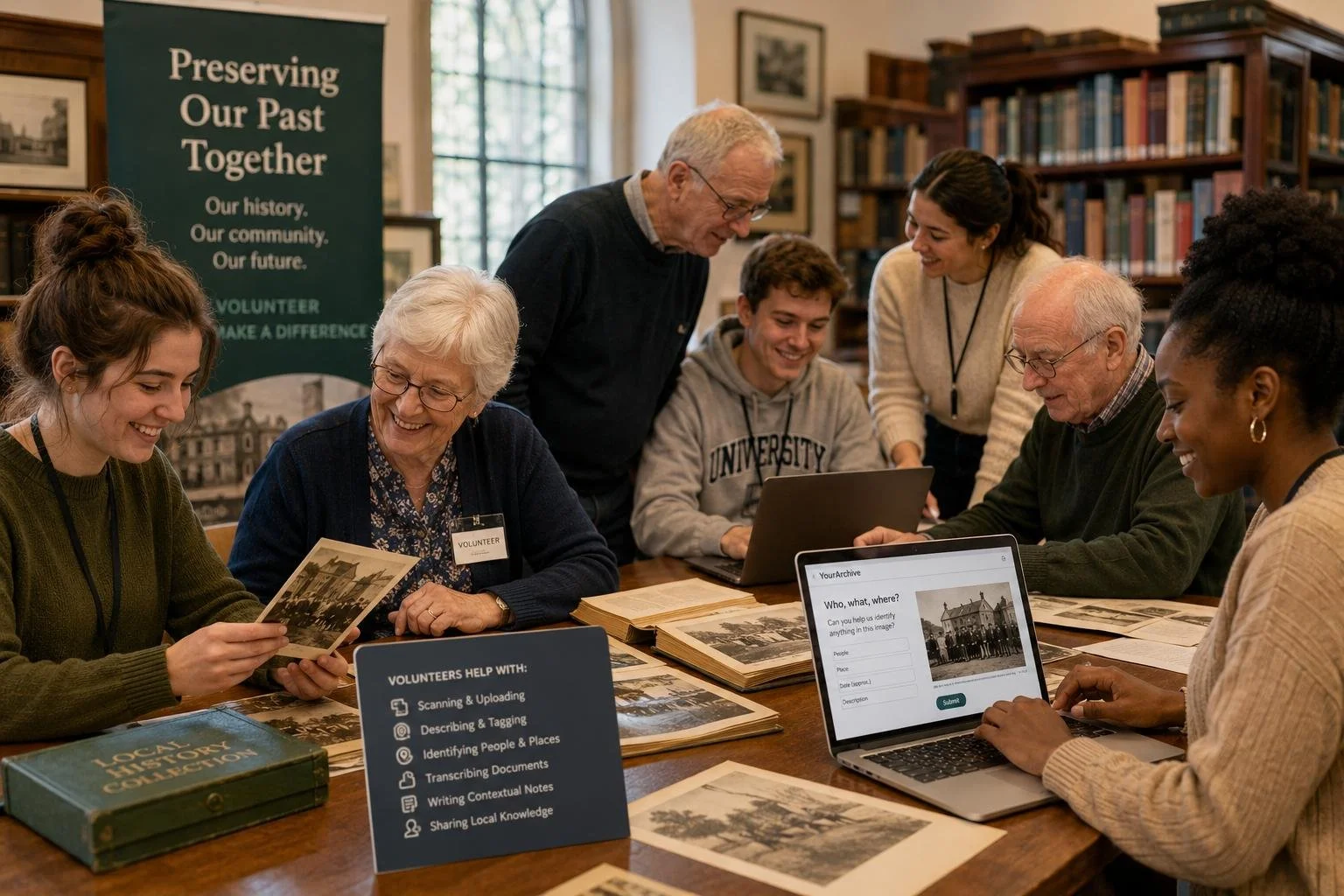
Record identification: Members of the public identify people, places and events depicted in photographs. Contextual knowledge that cannot be generated by cataloguing staff alone.
Oral histories: First-hand accounts from community members documenting lived experience, local events, and neighbourhood change. These can be some of the most powerful and underused parts of a digital archive. In our guide to capturing oral histories in digital archives, we explore how libraries can collect and share these stories at scale.
Contextual notes and corrections: Community members add information to existing records, correct errors, and supply details that enrich the historical value of items already in the collection.
This kind of contribution also matters beyond the collection itself. Community engagement is now an increasingly important factor in heritage funding applications, with funders expecting libraries and archives to demonstrate participation, not just access.
We explore this in more detail in What Funders Want to See From Archives, Libraries and Museums, including how engagement data strengthens funding applications.
More broadly, this reflects a shift towards community-driven archives, where collections are not just preserved, but actively shaped by the people they represent.
A Library Building for the Future: Jackson-George Regional Library System
The Jackson-George Regional Library System (JGRLS) in Pascagoula, Mississippi is one library putting this into practice. Serving around 163,000 residents across eight branches, JGRLS holds one of Mississippi's strongest genealogy and local history collections through its Singing River Genealogy and Local History Library.
Much of this material has until now been accessible only to those who could visit in person. JGRLS is currently building its digital archive using YourArchive, with the aim of making these collections publicly discoverable online for the first time and opening them up to community contribution. This will enable residents across the region, including those who cannot visit a branch in person, to access, explore and add to the historical record their library holds on their behalf.
The JGRLS approach reflects a broader shift among public libraries across the United States: from holding collections to actively sharing them, and from cataloguing history to inviting communities to help tell it.
History should be easily accessible for all and be curated with the user in mind.
"As part of the America250 Legacy Grant provided by the Mississippi Humanities Council, the Singing River Genealogy and Local History Library selected YourArchive as the digital platform to display its archival collections. Currently we are focusing on the history of Jackson and George Counties in Mississippi. We have acquired and digitised oral histories and local television programmes. We will expand these collections to include historical family collections and artefacts from local organisations to increase access. Many historical documents and artefacts in South Mississippi have fallen victim to fires, hurricanes, and tornadoes. In an area that is so prone to natural disaster, it is imperative that we do our part to preserve what we have for posterity."
Laura Thompson, MLIS
SRGLH Manager, Jackson-George Regional Library System
How Public Libraries Can Start a Digital Preservation Programme
Audit your collection
Set metadata standards
Choose a platform
Open contribution
Plan for sustainability
For library teams looking to begin a digital preservation programme, the scale of the undertaking can feel daunting. The following steps are designed to make the process manageable, regardless of the size of your team or budget.
1. Audit your collection and prioritize by risk and value
Not everything needs to be digitized at once. Begin by identifying the materials most at risk of physical deterioration (photographic prints, audio tapes, newsprint) and those with the highest community or historical significance. Fragility and irreplaceability should both inform your priorities.
2. Establish basic metadata standards before you start
Consistent metadata is what makes a digital archive searchable rather than simply stored. Decide on your field names, date formats and controlled vocabulary before digitization begins. Retrofitting metadata to a large collection is far more time-consuming than establishing standards at the outset. Dublin Core is a widely used, freely available metadata standard well-suited to public library local history collections.
3. Choose a platform built for community access
A digital asset management system designed for enterprise document storage will not serve the needs of a community archive. Look for a platform that supports public discoverability, community contribution, and multimedia content including photographs, documents and audio. The platform should make it easy for community members to browse, search and contribute without requiring specialist knowledge.
4. Create a contribution pathway for community members
Make it explicit and easy for members of the public to add to your collection. This might mean a simple online form for photograph donations, a mechanism for adding identifications and notes to existing records, or a structured oral history programme. The lower the barrier to contribution, the more your community will engage.
Many libraries have historically relied on social media platforms to share and collect community content. However, as we explore in Why Facebook Isn’t a Digital Archive, these platforms are not designed for long-term preservation, structured contribution, or reliable discovery over time.
5. Plan for sustainability, not just launch
A digital archive launched and then left static will quickly feel out of date. Build in a process for ongoing additions, regular community outreach, and periodic review of your metadata and file formats. This shift from static storage to active participation is what defines a modern digital archive. As we explore in How to Turn an Archive into a Living Community Resource, the most successful collections are those that continue to grow because people feel a sense of ownership over them.
What to Look for in a Digital Archive Platform
Choosing the right platform is one of the most consequential decisions in a digital preservation project. The wrong choice can mean expensive migration work later, or a collection that sits inaccessible and unused. The right choice creates infrastructure that serves your community for decades.
Six Things to Look for in a Digital Archive Platform
Generic document storage tools are not designed for community archives. Here is what actually matters.
Purpose-built for heritage
Designed for archives, libraries and museums, not repurposed enterprise software.
Community contribution
Can the public donate photographs, add identifications and submit oral histories?
Public discoverability
Good search and intuitive browsing so community members can actually find what they need.
Multimedia support
Photographs, scanned documents, audio recordings and video without needing separate systems.
Funding compatibility
Tracks and reports on engagement data, essential for IMLS and heritage grant applications.
Long-term access
Built to grow with community contributions, not just serve as a static repository.
The right platform does not just store your collection. It makes your collection useful to the community and helps you evidence that usefulness to funders.
When evaluating platforms, public libraries should consider:
Purpose-built for heritage collections: A platform designed for archives, libraries and museums will handle the specific needs of local history collections far better than a generic content management system.
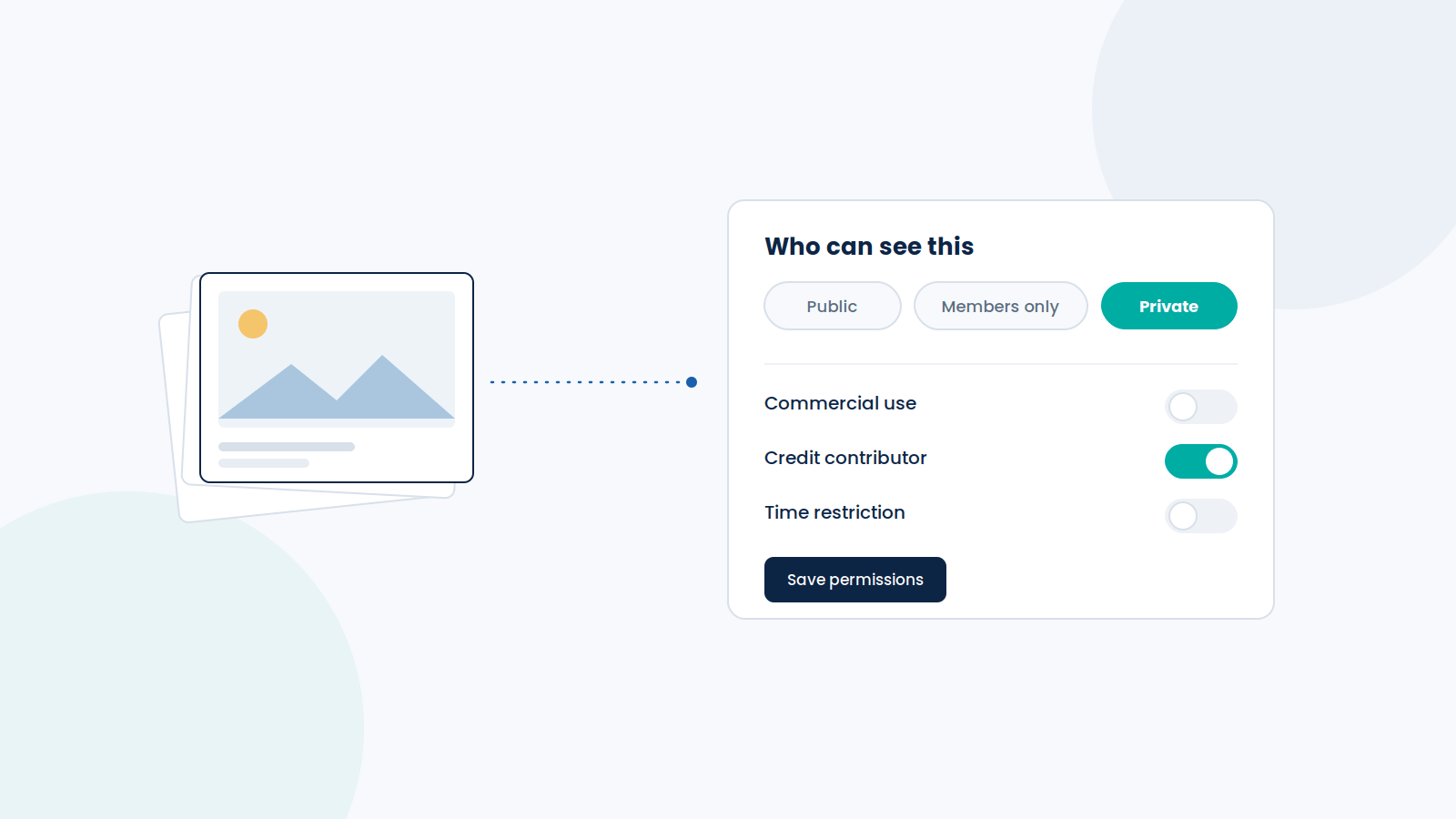
Community contribution features: Can members of the public add photographs, submit identifications, record oral histories, and attach contextual notes? A platform that enables contribution rather than just access transforms the archive from a repository into a community resource.
Discoverability: How easily can community members find what they are looking for? Good search, intuitive browsing, and clear item records determine whether your archive is actually used.
Multimedia support: Local history collections rarely consist of text documents alone. Your platform should handle photographs, scanned documents, audio recordings and video without requiring separate systems for each.
Funding compatibility: Does the platform help you evidence community engagement over time? Contribution numbers, and usage data are increasingly important for grant applications to bodies such as the Institute of Museum and Library Services (IMLS).
A note on IMLS funding
The Institute of Museum and Library Services is the primary source of federal support for US public libraries and has historically funded digital preservation projects across the US. IMLS grant programmes reward demonstrable community engagement and measurable access outcomes. A platform that tracks and reports on these metrics directly supports future funding applications.
For many libraries, meeting these expectations requires more than just digitization. It requires infrastructure that supports access, contribution and measurable engagement over time.
YourArchive is built specifically for heritage organisations including public libraries, archives and historical societies. It is designed to make collections publicly discoverable, enable community contribution, and provide the engagement evidence that matters for funding applications.
Building a Collection That Outlasts the Project
The most common concern we hear from librarians considering a digital preservation programme is sustainability. What happens when the grant runs out, the project lead moves on, or the initial enthusiasm fades?
The answer lies in community ownership. A digital archive that community members have contributed to — that contains their family photographs, their grandparents' oral histories, their identifications of forgotten buildings and faces — is an archive that community members have a stake in.
This is why the framing matters. Digital preservation is not a technical project with a start and end date. As the Library of Congress notes, effective digital preservation requires building relationships with stakeholder communities. Those relationships — between a library and its community — are what sustain a collection over time.
A community archive becomes more valuable the more people contribute
Every contribution adds to what the next person discovers.
Launch
Archive goes liveGrowth
Community keeps contributingThe archive does not stop when the project does. A collection that community members have contributed to keeps growing because people care about what it holds.
Practically, this means:
Communicating regularly with contributors about what has been added and what they have helped to preserve.
Involving local schools, historical societies, and community groups as ongoing partners rather than one-off participants.
Making the archive genuinely useful for everyday research — genealogy, local history, school projects — so it becomes part of how the community accesses its own past.
Documenting growth and contribution over time, both for internal planning and for future funding applications.
The libraries that do this well do not think of their digital archive as a completed project. They think of it as infrastructure, something that becomes more valuable the more the community uses and contributes to it.
Getting Started
The most important step in any digital preservation programme is the first one. Auditing what you hold, identifying your highest priorities, and choosing a platform that enables community contribution are all achievable goals for a library team of any size.
YourArchive works with public libraries, archives, museums and historical societies to build digital archives that are publicly discoverable, community-contributed, and built to last. If you are thinking about how to get started, we would be glad to talk through what is possible for your collection.
Book a demo here, or contact us with any questions you may have.
FAQs:
What is digital preservation for libraries? Digital preservation for libraries is the ongoing process of ensuring that digitized and born-digital materials remain accessible, intact, and findable over time. It goes beyond scanning to include file format management, metadata, storage redundancy, and long-term access planning.
How do public libraries start a digital archive? Public libraries typically start by auditing their collections and prioritizing materials by fragility and community significance. The next steps are establishing metadata standards, choosing a platform suited to community access, and creating a pathway for community contribution. Starting small with a defined collection is more effective than attempting to digitize everything at once.
What metadata standards should libraries use for digitization? Dublin Core is a widely used, freely available metadata standard well-suited to public library local history collections. It provides a simple, consistent set of fields that support discoverability across systems. Libraries with more complex needs may also look at more detailed standards such as MARC or EAD depending on their collections.
Can community members contribute to a library digital archive? Yes, and this is increasingly considered best practice. Community members can contribute photographs and documents from their own collections, add identifications and contextual notes to existing records, and participate in oral history programmes. Platforms like YourArchive are designed specifically to enable this kind of community contribution alongside the library's own holdings.
Does digital preservation support library funding applications? Yes. Bodies such as the Institute of Museum and Library Services (IMLS) increasingly expect grant applicants to demonstrate community engagement and measurable access outcomes. A digital archive that enables and tracks community contribution provides exactly the kind of evidence that strengthens funding applications.
Other articles that may be of interest: