The People Who Keep History Alive: A Volunteer Guide for Libraries, Museums and Historical Societies
LAST UPDATED: May 2026
Summary: Volunteers have always been the quiet backbone of heritage work. They sort the boxes nobody else has time for, transcribe the documents that would otherwise remain unreadable, and carry in their memories the contextual knowledge that no catalogue entry can fully capture. This guide explores how libraries, museums and historical societies can find the right volunteers, involve them meaningfully, reach them remotely, make them feel genuinely valued, and perhaps critically, capture what they know before it is gone.
The collections hiding in plain sight
Every local history collection has them.
The box of unidentified photographs. The handwritten minutes nobody has transcribed. The fading newspaper cuttings tucked into folders that only one person knows how to navigate. The shelves of community newsletters, parish magazines, oral history recordings and donated artefacts waiting to be organised when there is time.
Most libraries, museums, archives and historical societies are holding more than they can handle. Small teams are expected to care for growing collections while managing public access, exhibitions, funding applications, community engagement and increasingly complex digital preservation responsibilities. Collections continue to grow faster than organisations can realistically catalogue them.
Community volunteers have become genuinely indispensable in this context. The willingness of people to help has always been there. What has changed is the scale of what volunteers can now meaningfully do, and the urgency of doing it before the knowledge they carry is gone.
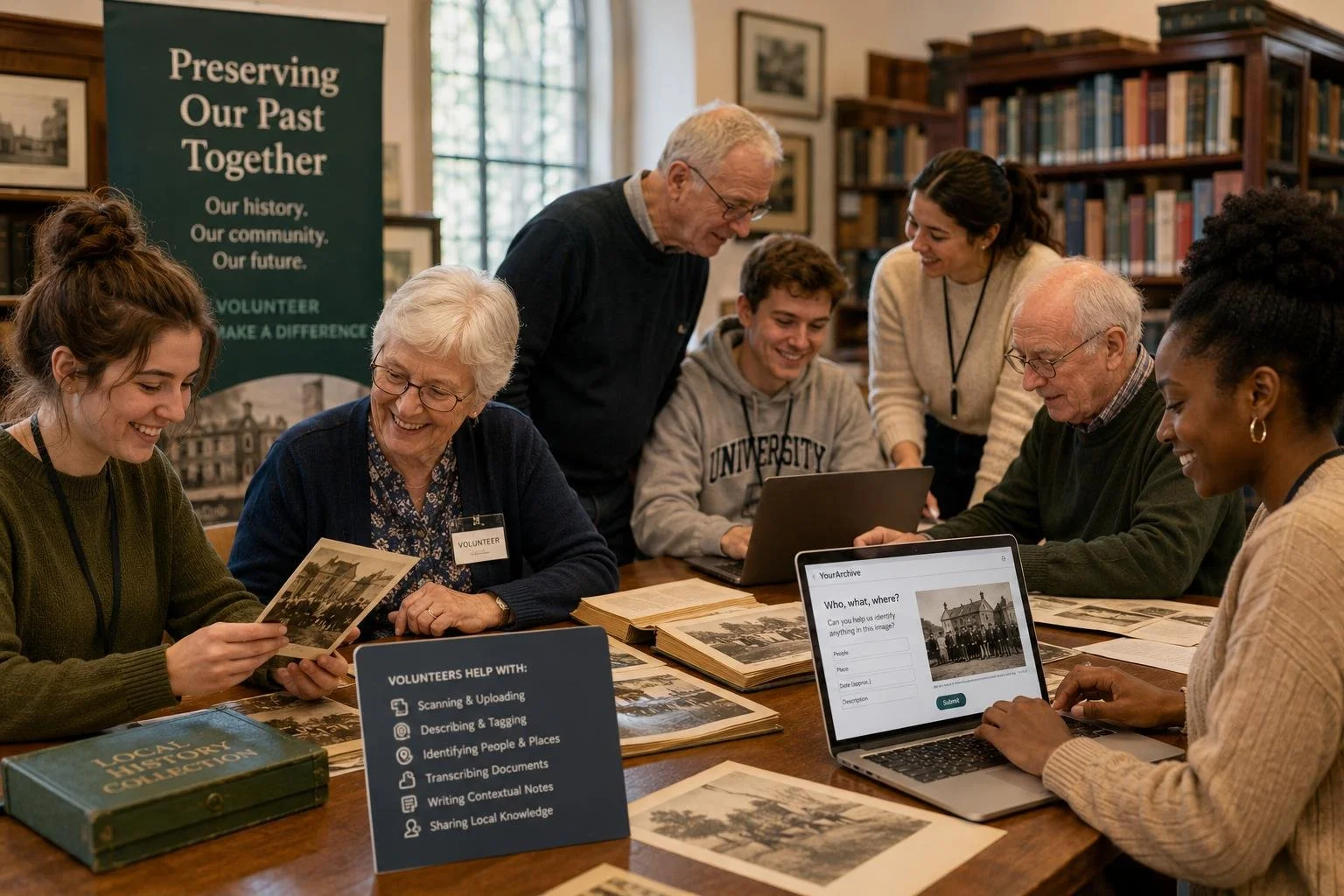
Why volunteers are the backbone of heritage organisations
Walk into almost any local historical society, regional archive or community museum and you will find the same thing: a small paid staff, if there is paid staff at all, sustained by a network of volunteers whose contribution is so woven into the fabric of the organisation that it has become almost invisible. The collections are accessible because volunteers catalogued them. The photographs are identified because volunteers remembered the faces. The oral histories exist because volunteers sat with elders in living rooms and listened.
Volunteers have been central to heritage work for as long as heritage work has existed as a recognisable practice. What has changed is the scale of what is now possible, and the urgency of what is at stake.
Digital tools have opened up forms of volunteer contribution that simply did not exist a generation ago. A diaspora community member living thousands of miles away can add context to a photograph collection held in a library near where she grew up. A local historian with no formal qualifications can contribute metadata, correct errors and surface knowledge that no amount of professional cataloguing would have uncovered.
Large institutions have already demonstrated the power of this model at scale. The Library of Congress runs successful crowdsourced transcription projects that allow volunteers to make historical records searchable and accessible. The Smithsonian Institution has built major digital volunteer initiatives around transcription and collection enhancement. What these programmes have proved is that community contributors, given the right structure and tools, can produce work of genuine archival quality.
The same principles are equally valuable for smaller organisations, and smaller heritage organisations hold something that national institutions cannot replicate: local knowledge. The person identifying people in a 1970s carnival photograph may not be a trained archivist, but she may be the only person left who remembers the event. A retired teacher may recognise an old classroom photograph immediately. A former resident may be able to identify shops, streets or traditions that no catalogue record currently explains.
Community volunteers are helping organise collections, and in many cases helping preserve the meaning behind them.
The knowledge held by long-serving volunteers, the contextual, relational, experiential knowledge that exists nowhere in any finding aid, is more at risk than it has ever been. As those volunteers age, the window to capture what they know is narrowing. The organisations that understand this treat volunteer engagement as a preservation imperative, not simply a capacity solution.
How to find volunteers for your library, museum or historical society
Three channels that consistently deliver
The organisations that attract the right volunteers describe a real role with real tasks, rather than a generic call for help.
University and college partnerships
Students in history, archival science, library science and digital humanities are actively seeking real-world experience. Platforms like Handshake connect them directly with heritage organisations. St Peter's School in York received eleven applications for a single role through this channel alone.
Local community networks
Retired teachers, librarians, journalists and civil servants bring organisational skills, subject knowledge and deep local connections that a recent graduate cannot replicate. These volunteers often carry exactly the contextual knowledge collections most need.
Your own visitors and users
The person who lingers over a particular exhibition, the member who always has something to add after a talk, the regular who knows the local history collection better than the staff. These people are already engaged. A direct, personal invitation is often all that is needed.
Specificity is everything. The more clearly a role is defined, the more likely it is to attract someone whose skills genuinely match what the work requires.
How to get volunteers involved: digitising, organising and working with platforms that don't intimidate
Volunteer digitisation projects most commonly stall because the tools chosen to support the work are too complicated, too technical or too poorly documented for a volunteer working independently to navigate with confidence. This is a solvable problem, but it requires organisations to think carefully about what they are asking volunteers to do and whether the platforms they are using genuinely support self-directed work.
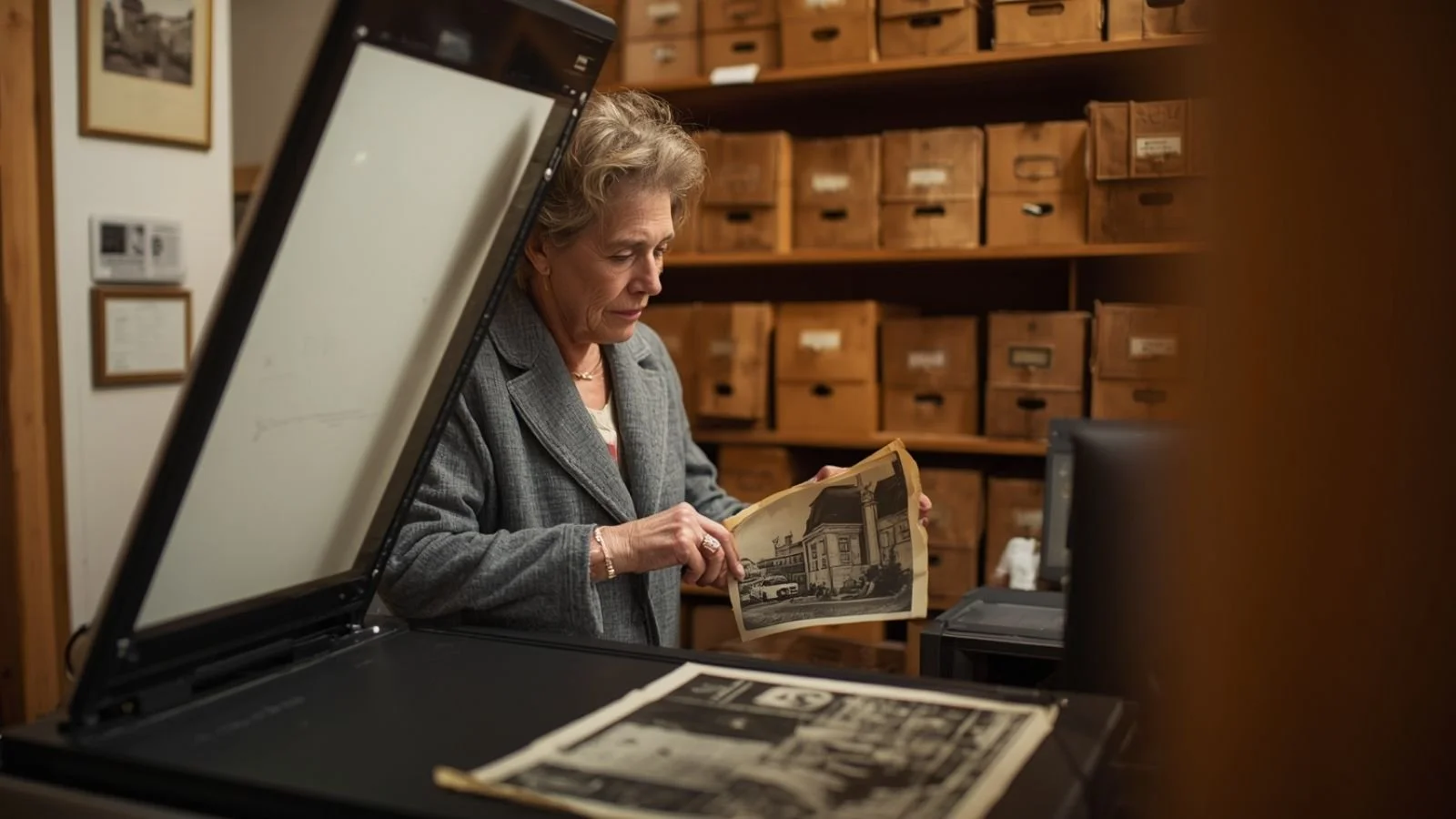
The tasks most suited to volunteer involvement in a digital heritage project typically include scanning and uploading physical documents, photographs and artefacts; applying descriptive metadata such as titles, dates, locations and subject tags; writing brief contextual notes and descriptions for individual items; identifying people, places and events in photographs and documents; transcribing handwritten or typewritten text; linking related items across a collection; and flagging items that need conservation attention or specialist review.
Each of these tasks can be carried out to a high standard by a motivated volunteer with minimal specialist training, provided the platform they are working on makes the process clear. The best digital heritage platforms present contribution tasks in plain language, provide guided fields rather than open-ended forms, and give volunteers immediate visual feedback when an item has been successfully processed. They also allow administrators to review and moderate contributions before they are published, which removes the anxiety that volunteer errors will corrupt a collection.
A well-structured volunteer induction does not need to be lengthy. A short walkthrough of the platform, a written task guide that volunteers can refer back to independently and a clear point of contact for questions is typically sufficient. Volunteers respond to feeling trusted to make a genuine contribution from early in their involvement. Being given a clearly defined task, a tool that makes it achievable, and the understanding that their work will become part of a real, accessible collection is motivating.
How to involve volunteers remotely: widening access, filling contextual gaps and reaching communities that cannot come to you
One of the most significant shifts in heritage volunteering over the past decade is the growth of remote contribution. Transcription projects, tagging initiatives and crowdsourced identification programmes have demonstrated that meaningful, high-quality archive work does not require physical presence. This has profound implications for the range of people an organisation can involve, and for the kind of knowledge a collection can realistically capture.
A historical society in rural New England can now draw on the knowledge of former residents scattered across the country. A local library can involve the children and grandchildren of immigrant communities who hold contextual knowledge about photographs and documents that no local researcher could supply. A museum can connect with academic specialists, diaspora communities and subject experts who would never be able to visit in person but are willing and able to contribute remotely. Community members who cannot physically volunteer due to health, mobility or caring responsibilities can still participate meaningfully online.
This matters particularly for collections tied to specific communities whose members have dispersed over time: diaspora histories, migration narratives, military collections, industrial heritage, school archives and regional identity projects all benefit enormously from the ability to reach contributors wherever they now live.
Remote volunteer contribution is especially powerful for two specific tasks:
Metadata completion
The first is metadata completion. A photograph without a date, location or any descriptive tags is effectively invisible to anyone who does not already know it exists. Remote volunteers working through a structured online interface can apply tags, suggest dates, add location information and write descriptions at scale, transforming an undiscoverable collection into a navigable one.
Contextual gap-filling
The second is contextual gap-filling. Archive collections frequently contain items whose significance is opaque to everyone except those with specific personal, community or regional knowledge. The photograph of a street celebration that means nothing to a cataloguer means everything to someone who grew up on that street. The document written in a community language that a library cannot read becomes fully legible when a remote volunteer with the right linguistic background is invited to transcribe it.
Platforms that support structured remote contribution, with guided submission forms, prompted questions and clearly signposted tasks, consistently produce better results than those that present an open interface and ask volunteers to decide for themselves what to add. The quality of remote contributions also tends to improve when volunteers can see the work of others: when someone submits a contextual note and sees it published alongside the item it describes, the contribution feels real, and the archive develops a collaborative momentum that no single organisation could generate alone.
This is ultimately what separates a static digitised collection from a living community archive. Once people begin actively contributing their knowledge, the collection stops being something the organisation manages alone and becomes something the community helps build.
How community knowledge builds over time
One remote contributor identifies a face. Another supplies the history behind the event. A third corrects a date. The item becomes something no cataloguer could have produced alone.
A photograph donated in 1994 as an unidentified street scene is now a dateable, named, historically contextualised record of the 1961 or 1962 Steelworkers' Gala — with two named individuals, an identified trade union lodge, and an academic citation. No cataloguer could have produced this. The community already held every piece of knowledge. The archive gave them a place to put it.
How to make volunteers feel genuinely valued
Volunteer retention in heritage organisations is closely correlated with one factor above almost any other: whether volunteers feel that their contribution is seen, acknowledged and meaningful. Organisations with the lowest turnover are the ones where volunteers know their work matters and that the people they work alongside know it too.
Recognition does not require budget. It requires attention.
The most effective forms of recognition in heritage volunteering tend to be specific rather than generic. A personal note acknowledging a particular contribution is worth more than a blanket thank-you email sent to everyone on the volunteer list. Being named in a published collection, featured in a newsletter or credited in an exhibition acknowledges the volunteer as a genuine contributor to the historical record, not merely a helper.
There is also a less commonly recognised form of recognition that matters enormously to heritage volunteers: being trusted with increasing responsibility. Volunteers who begin with straightforward tagging tasks and are invited, as their familiarity grows, to take on more complex descriptive work, help onboard newer volunteers or contribute their own expertise to collection development, tend to remain engaged far longer than those whose role never evolves.
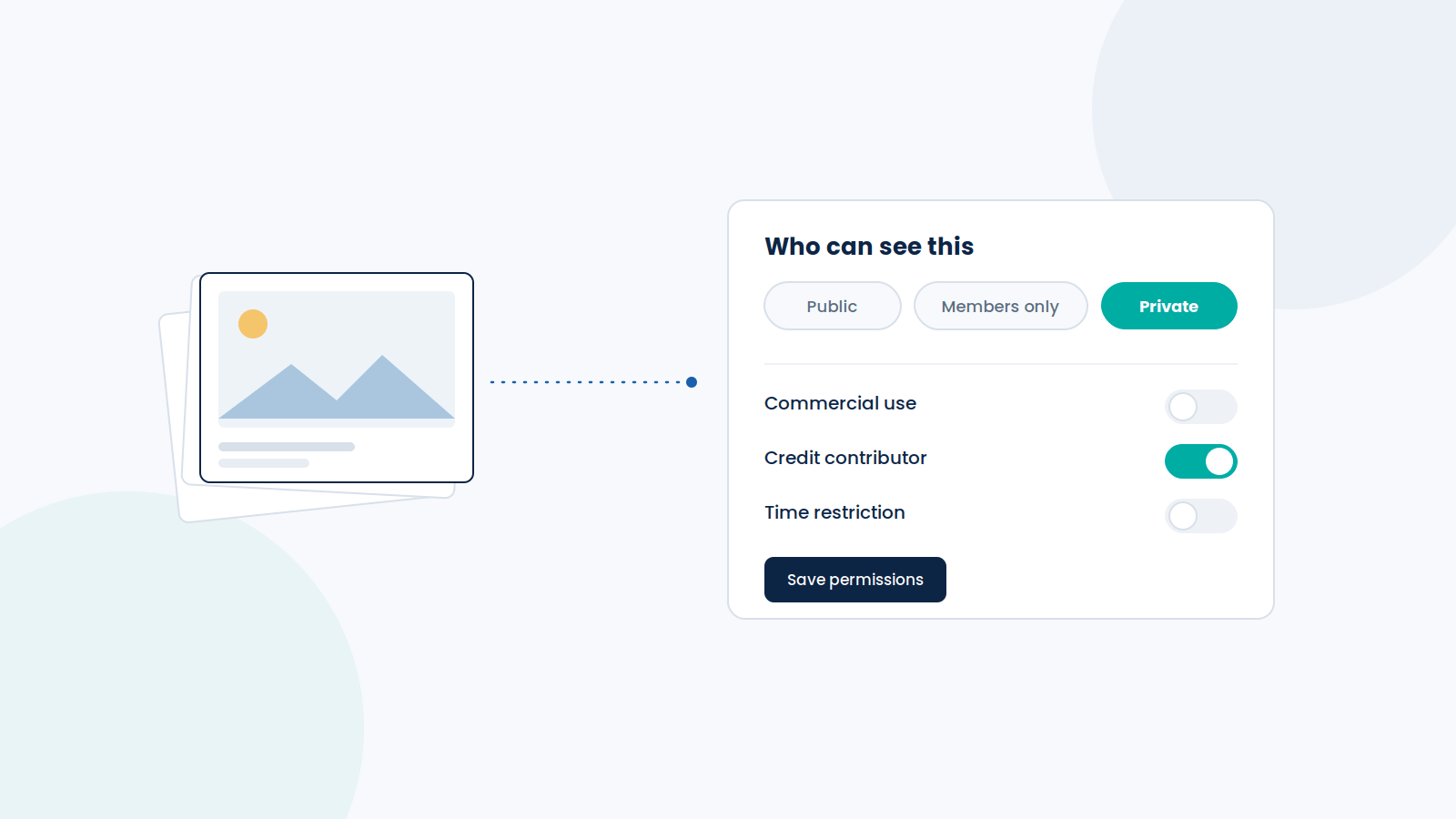
Digital platforms offer new possibilities for public recognition that previous generations of heritage organisations did not have. A volunteer's photograph identifications, transcriptions and contextual notes can be attributed to them within the platform itself, creating a visible, permanent record of their contribution to the collection. For many volunteers, particularly older ones whose life experience and local knowledge represents years of accumulated expertise, seeing their name attached to their contributions within a searchable, publicly accessible collection is deeply meaningful.
Practical steps that consistently improve volunteer satisfaction include regular, brief one-to-one check-ins rather than infrequent formal reviews; clear communication about how volunteer contributions are being used; invitations to events, launches and milestones as genuine participants rather than afterthoughts; opportunities to share expertise publicly through talks, guided sessions or written contributions; and honest feedback on the quality and impact of the work.
What undermines volunteer satisfaction, almost universally, is the feeling of being given work that nobody is paying attention to. Closing that feedback loop, however simply, is one of the highest-return investments a heritage organisation can make in its volunteer programme.
Volunteer involvement and funding: why it matters strategically
Volunteer engagement is not only operationally valuable. Increasingly, it matters strategically when making the case to funders.
Heritage funders on both sides of the Atlantic have shifted their emphasis significantly in recent years. Many now place as much weight on community participation, accessibility and demonstrable public engagement as they do on the quality of the collection itself. A digitisation project that involves the community in its own preservation tells a more compelling story than one that treats the public as a passive audience for finished outputs.
Volunteer-led digitisation and identification projects naturally support the kinds of outcomes funders want to see: widened participation, strengthened local engagement, surfaced hidden histories, intergenerational involvement and improved access to collections. The measurable dimension matters too. An organisation that can say our volunteer programme contributed 3,400 hours of metadata work, identified 840 previously unidentified photographs and involved 67 community contributors over twelve months is making a case for impact that a collection of excellent scans alone cannot.
This is particularly relevant for organisations preparing for milestone anniversaries or heritage initiatives, where community contribution projects tied to a specific moment (a centenary, a significant local anniversary, a regional history programme) can generate both sustained engagement and fundable outcomes in the same motion.
The volunteer knowledge gap: capturing what people carry before it is gone
Every heritage organisation has volunteers who know things that are not written down anywhere.
The woman who has been staffing the reference desk for twenty-two years and can tell at a glance which family a surname belongs to in the local area. The retired schoolteacher who remembers the context behind a photograph taken at a civic event in 1971 because he was there. The volunteer who has been sorting the society's photograph collection for a decade and has absorbed, through years of patient handling, a level of contextual understanding that no finding aid reflects.
This knowledge is undocumented in the ordinary course of things, and the collection is poorer for it. When these volunteers retire, move away or pass on, what they carry goes with them. Treating this as a preservation emergency rather than a background concern is the difference between a collection that remains fully interpretable in twenty years and one that slowly becomes opaque.
The loss is not always dramatic. It tends to happen gradually: a name attached to a photograph that nobody thinks to write down, a story behind an object that gets mentioned once in passing and never again, an explanation of a local tradition that existed only in one person's memory. Each individual loss is small. Collectively, over years and decades, the effect is that collections become progressively less interpretable. The records exist, but the meaning behind them quietly disappears.
The most effective approach to this problem is also the most straightforward: ask, and record.
Structured oral history interviews with long-serving volunteers, conducted with the same rigour applied to community oral history projects, can capture decades of accumulated knowledge in a form that becomes part of the permanent record. Prompted questions work considerably better than open-ended ones. "What do you know about this photograph that is not written anywhere?" produces richer material than "Tell me about your time here." Recording sessions do not need to be technically sophisticated: a phone, a quiet room and a thoughtful set of questions is sufficient.
For organisations that want to go further, a dedicated oral history tool removes the friction of storing, organising and sharing recordings once they exist. YourArchive's Spoken Stories feature allows volunteers to record reflections directly through a guided interface, with prompted questions that surface the kind of contextual detail a free-form recording rarely captures. Recordings are stored within the collection itself, attributed to the contributor, automatically transcribed and fully searchable.
Capturing the Stories of Your Volunteers
The right question, asked at the right moment, surfaces knowledge that would never normally make it into the archive. A phone and guided prompts is all it takes.
Every Spoken Story is automatically transcribed, attributed to the contributor and stored within the collection itself.
Beyond formal interviews, there are less structured approaches that can run continuously rather than as one-off projects. Asking volunteers to add brief notes to items they are working with captures contextual knowledge at the moment it surfaces, in the flow of ordinary volunteer work, without requiring a separate recording programme. A volunteer who notes "I recognise the building in the background as the old grammar school on Market Street, demolished in 1978" while tagging a photograph is doing preservation work that no cataloguing exercise would have produced. Platforms that make this kind of incidental annotation easy, and that store it in a form that is searchable and attributable, are supporting a form of preservation that most organisations have not yet found a systematic way to approach.
The urgency of this work is real. The median age of volunteers in heritage organisations in the United States and United Kingdom is consistently reported as being in the sixties. The knowledge held by the current generation of long-serving heritage volunteers is, in many cases, genuinely irreplaceable. There is no second chance to capture what someone knows once they are no longer available to share it. Acting on this now, rather than filing it as a future intention, is what keeps collections fully comprehensible to future researchers.
Putting it together: a volunteer programme that works
The most successful volunteer programmes in libraries, museums and historical societies treat volunteering as a two-way relationship. The organisation provides structure, tools, recognition and genuine purpose. The volunteer provides time, skill, local knowledge and, in many cases, an irreplaceable connection to the community the collection represents.
Getting this balance right does not require a large budget or a dedicated volunteer coordinator. It requires clear role definitions, accessible tools, consistent communication and the organisational discipline to close the feedback loop between volunteer contribution and published result.
Remote contribution tools, guided submission platforms and structured annotation interfaces have removed many of the practical barriers that previously limited volunteer involvement to those who could attend in person during opening hours. The pool of people who can contribute meaningfully to a heritage collection has never been larger.
The organisations making the most progress in digital preservation have understood volunteering as something more than a staffing solution: as a way of building collections that are genuinely co-created with the communities they represent. Volunteers come because they care about the history their organisation holds. They stay because they feel that care is reciprocated. And the knowledge they bring (the names, the dates, the stories behind the photographs, the context that never made it into any official record) is precisely what heritage work exists to preserve.
YourArchive helps libraries, museums and historical societies do exactly what this guide describes: digitise collections, involve volunteers near and far, capture the knowledge they carry, and build archives that communities can genuinely contribute to and explore.
If you'd like to see how it works for organisations like yours, contact us or book a demo here.
FAQs:
How do libraries and historical societies find good volunteers?
The most productive channels are university and college partnerships, particularly through platforms like Handshake that connect students with heritage volunteering opportunities, local community networks and the organisation's own regular visitors and members. Role descriptions that specify concrete tasks attract better-matched applicants than generic calls for help. Organisations that describe exactly what a volunteer will be doing, and why it matters, consistently attract stronger candidates.
What tasks are most suited to volunteers in a digital heritage project?
Volunteers are well suited to scanning and uploading materials, applying metadata and descriptive tags, writing contextual notes, identifying people and places in photographs, transcribing documents and linking related items across a collection. These tasks can all be carried out to a high standard by a motivated volunteer with clear guidance and an accessible platform, without requiring specialist archival qualifications.
How can heritage organisations involve volunteers remotely?
Remote volunteering works particularly well for metadata completion and contextual gap-filling. Structured online contribution platforms with guided forms and prompted questions allow volunteers to add descriptive information, identify people and places and supply contextual knowledge from anywhere in the world. This widens the pool of potential contributors to include former residents, diaspora communities, academic specialists and subject experts who would never be able to visit in person.
How do you retain volunteers in a heritage organisation?
Retention is most strongly correlated with volunteers feeling that their contribution is seen and meaningful. Specific, personal acknowledgement of individual contributions, opportunities for increasing responsibility as familiarity grows, clear communication about how work is being used and public attribution within the collection itself all significantly improve retention. Contributions that go unreviewed and unacknowledged are the most reliable driver of disengagement.
What is the volunteer knowledge gap and why does it matter?
The volunteer knowledge gap refers to the contextual, relational and experiential knowledge held by long-serving volunteers: knowledge that exists nowhere in any finding aid or catalogue record. As heritage volunteers age and move on, this knowledge is at serious risk of being permanently lost. Structured oral history interviews, prompted annotation during ordinary volunteer work and digital platforms that make incidental contextual notes easy to record and store are all effective approaches to capturing this knowledge before the window closes.
How does volunteer involvement support heritage funding applications?
Many heritage funders now place significant emphasis on community participation, accessibility and measurable public engagement alongside the quality of collections. Volunteer-led digitisation and identification projects generate demonstrable outcomes including participation numbers, contribution hours and newly identified or accessible materials. These outcomes strengthen funding applications significantly, particularly for projects tied to community anniversaries or regional heritage initiatives.
How do digital platforms support volunteer involvement in heritage projects?
Digital platforms designed for community heritage work allow volunteers to contribute structured metadata, write contextual descriptions, identify people and places in photographs and submit oral histories and written reflections through guided online interfaces. Platforms that provide prompted questions, clear task structures and immediate visual feedback support self-directed volunteer work without requiring constant supervision. Attribution features that credit volunteer contributions within the published collection also provide a meaningful and permanent form of recognition. YourArchive is built around exactly these principles, allowing organisations to combine digitisation, community contribution, oral histories and searchable collections within a single platform.
Do volunteers need specialist training to contribute to a digital archive?
Rarely. A short platform induction, a written task guide and a clear point of contact for questions is typically sufficient for volunteers undertaking standard contribution tasks. Access to tools that make the work achievable independently, combined with prompt feedback confirming contributions have been received and used, matters more than formal training.
Other articles that may be of interest: